Before anyone can get behind the wheel of a big rig, they need a Commercial Learner’s Permit, or CLP. This permit is the first official step toward a Class A or Class B CDL. It proves to the DMV that you’ve passed the required knowledge tests and are ready to start supervised practice driving.
This guide walks through what a commercial learner’s permit is, who qualifies for one, and the steps to get it in California. For a look at the full path from permit to license, see our step-by-step guide to getting a CDL in California.
What Is a Commercial Learner’s Permit?
A CLP is a permit issued by the DMV that allows a person to practice driving a commercial vehicle under supervision. It is not a license. Someone who holds a commercial learner’s permit cannot drive a commercial vehicle alone. A qualified CDL holder with the same class of license (or higher) must sit in the front seat at all times while a permit holder is driving.
The CLP exists so students can complete their behind-the-wheel training before taking the CDL skills test.
Who Can Apply for a CLP
To apply for a CLP in California, an applicant generally needs to:
- Be at least 18 years old to drive within California, or 21 years old to drive across state lines or haul hazardous materials
- Hold a valid, unexpired California driver’s license
- Provide a valid DOT medical certificate showing they are physically qualified to drive a commercial vehicle
- Provide proof of identity, Social Security number, and California residency
- Submit a 10-year driving history from any other state where they held a license in the past decade, if this applies
Anyone who has held a license in another state within the last 10 years should be ready to request that record ahead of time, since it can take a few weeks to arrive.
These are the requirements specific to the commercial learner’s permit. For the full list of what’s needed to earn a CDL in California, including driving record and citizenship rules, see our California CDL requirements guide.
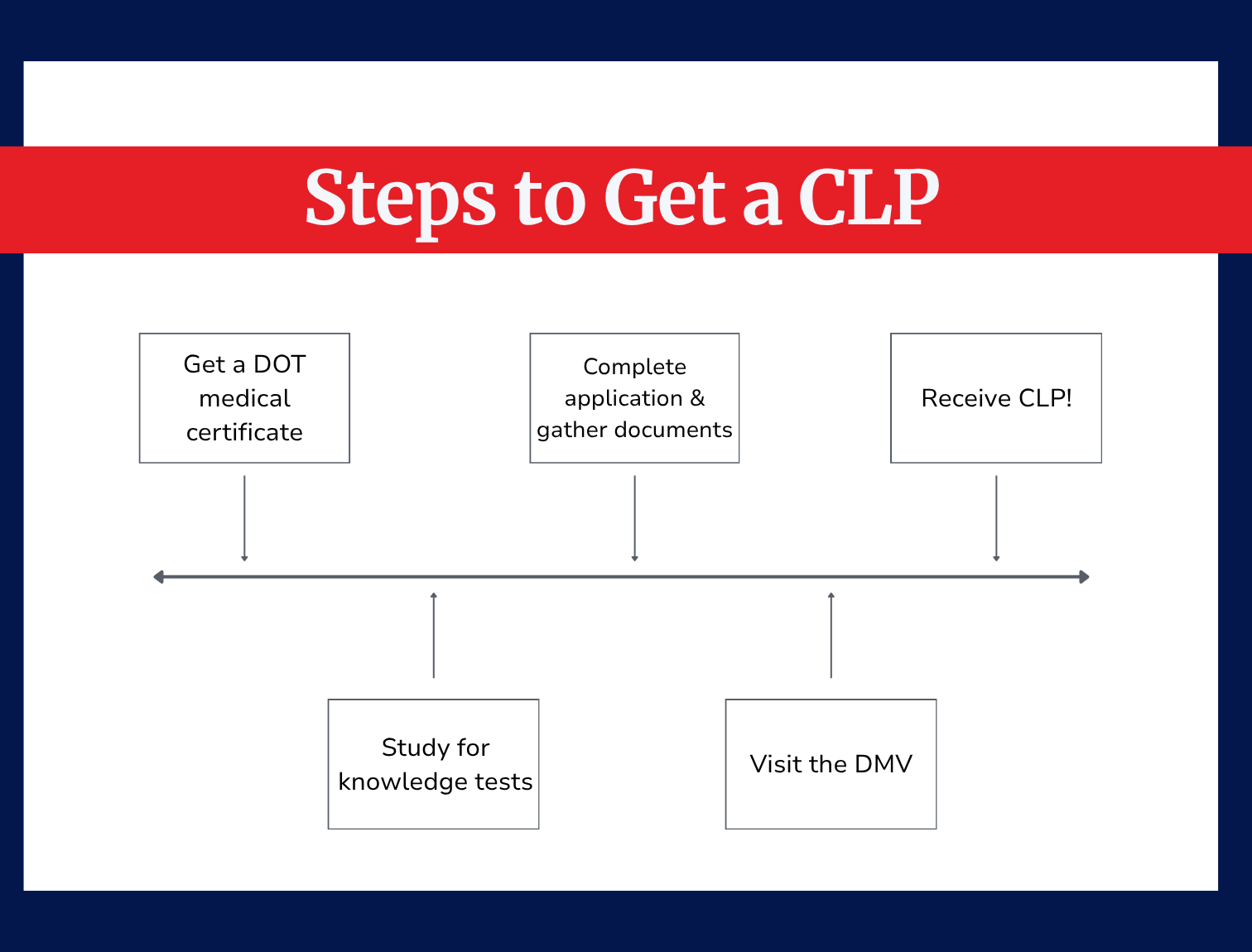
Steps to Get a CLP
- Get a DOT medical certificate. A commercial driver must be examined by a certified medical examiner and found physically qualified to operate a commercial vehicle. This certificate needs to be submitted electronically before the DMV will issue a CLP.
- Study for the knowledge tests. Every applicant must pass the General Knowledge test. Depending on the type of CDL and any endorsements a person wants, they may also need to pass tests covering air brakes, combination vehicles, or other specific topics. These written tests cover things like vehicle inspection, basic control, and safe driving practices.
- Complete the online CDL application and gather documents. California requires applicants to fill out an online application before their DMV visit. Applicants should bring proof of identity, proof of residency, their Social Security number, and their medical certificate information to the appointment.
- Visit the DMV. At the appointment, the applicant will have their photo taken, provide a fingerprint, pass a vision screening, and take the required knowledge tests.
- Receive the commercial learner’s permit. Once the applicant passes the required tests, the DMV issues a paper permit that same day. The plastic card arrives by mail a few weeks later. In California, the permit is valid for 180 days, and the applicant must hold it for at least 14 days before taking the CDL skills test.
The ELDT Requirement
Federal rules under the Entry-Level Driver Training (ELDT) mandate require anyone getting a CDL for the first time, upgrading from Class B to Class A, or adding certain endorsements, to complete training through a school listed on the FMCSA’s Training Provider Registry. This training is split into two parts: classroom theory and behind-the-wheel practice.
The classroom theory portion can start before a CLP is issued. The behind-the-wheel portion cannot start until after the permit is in hand, since a real commercial vehicle is required for that training. This is where a CLP holder’s supervised practice hours actually happen.
What Happens After I Get My CLP
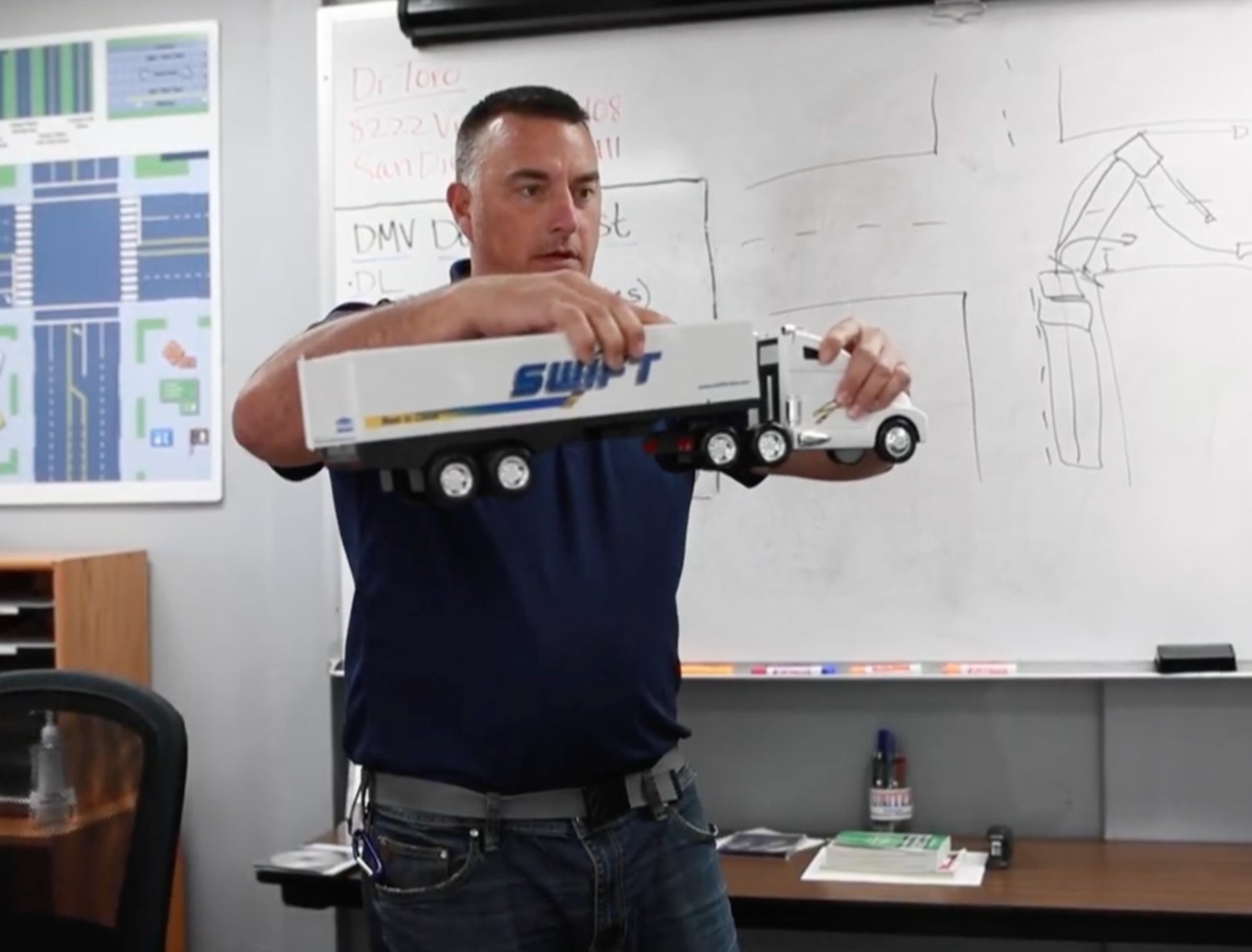
Once a student has their permit and has completed the classroom theory portion, they move into behind-the-wheel training. California requires a minimum of 15 hours of behind-the-wheel instruction, and this training must be documented and submitted to the DMV. After finishing this training and holding the commercial learner’s permit for at least 14 days, a student can schedule the CDL skills test. Passing that test is what turns a CLP into a full CDL.
Wondering how this fits into the bigger picture? See how long CDL training takes from start to finish.
Where This Fits at United Truck Driving School
Getting a commercial learner’s permit is a requirement before anyone can start behind-the-wheel training at United Truck Driving School. During admissions, staff walk students through the medical certificate, the knowledge tests, and the DMV paperwork needed to get their permit. United is a registered training provider under the ELDT mandate, so classroom theory and behind-the-wheel hours completed here count toward the federal requirements. Students who need help paying for training can also look into tuition assistance options before they start.
Frequently Asked Questions
How old do you have to be to get a CLP in California?
You must be at least 18 to get a commercial learner’s permit for driving within California. If you plan to drive across state lines or haul hazardous materials, you must be at least 21.
Do I need a medical certificate before I can apply for a CLP?
Yes. A DOT medical examiner must certify that you are physically qualified to drive a commercial vehicle, and this information must be submitted before the DMV issues a CLP.
How long is a California CLP valid?
A California commercial learner’s permit is valid for 180 days from the date it’s issued.
Can I drive alone with a CLP?
No. A permit holder must always have a qualified CDL holder with the matching class of license in the front seat while driving.
How soon can I take the CDL skills test after getting my CLP?
You must hold the permit for at least 14 days before you’re allowed to take the skills test.
Does classroom training have to happen before I get my CLP?
The classroom theory portion of ELDT training can start before you have a commercial learner’s permit. Behind-the-wheel training cannot start until after you have your permit in hand.
What documents do I need to apply for a CLP?
You’ll need proof of identity, proof of California residency, your Social Security number, your DOT medical certificate information, and a 10-year driving history if you’ve held a license in another state in the past decade.
What happens if I don’t pass the knowledge test on my first try?
Applicants who don’t pass can retest, though wait times and retest rules can vary. Studying the CDL manual ahead of time is the best way to avoid a repeat visit.
Does a CLP guarantee I’ll pass the CDL skills test?
No. The commercial learner’s permit only allows supervised practice driving. Passing the skills test still requires completing behind-the-wheel training and demonstrating the required driving skills.