Trucks move about 70% of the freight in the United States. That makes commercial truck drivers some of the most in-demand workers in the country. Getting a California commercial driver’s license (CDL) is the first step toward a stable, well-paying career in trucking. The process includes meeting age and health requirements, completing federally required training, and passing both knowledge and skills tests.
This guide covers every step of the California CDL process, from the documents needed at the start to the financial aid options that can make training costs manageable.
Before Starting: California CDL Requirements
Before starting the CDL process, applicants must meet age, licensing, and documentation requirements set by the California DMV and FMCSA. The full breakdown is covered on the California CDL requirements page. Drivers must also pass a medical exam before applying. See what to expect from the DOT physical before scheduling any DMV appointments.
Step-by-Step: How to Get a CDL in California
The CDL process in California follows a set order. Each step must be completed before moving to the next. Here is what to expect from start to finish. See also: CDL training programs at DriveTrucks.
1. Apply for a Commercial Learner’s Permit (CLP)
Complete an online CDL application through the California DMV portal. At the DMV office, drivers submit a 10-Year History Record Check if they have held licenses in other states within the past 10 years. Thumbprints and a photograph are taken at this visit.
2. Pass the CDL Knowledge Tests
For a Class A CDL, applicants must pass three written tests: General Knowledge (50 questions, 80% passing score), Class A-specific knowledge, and Air Brakes. Drivers get three attempts per test section. The CDL handbook is the primary study resource.
3. Receive the Commercial Learner’s Permit and Wait 14 Days
Federal regulations require a 14-day waiting period after receiving the CLP before a driver can take the skills test. Build this into the training schedule.
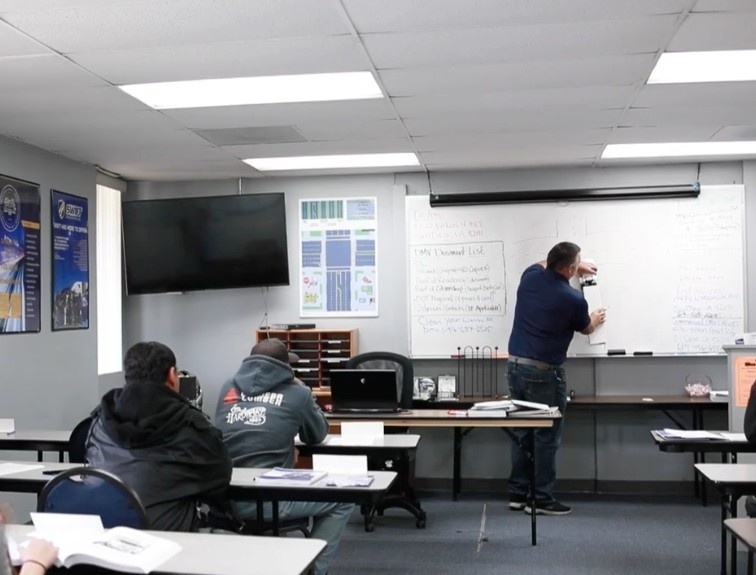
United Truck Driving School helps students obtain their CLP as part of their CDL Training in the first week.
4. Complete Entry-Level Driver Training (ELDT)
Since February 7, 2022, Entry-Level Driver Training (ELDT) has been required by federal law for all Class A and Class B CDL applicants. California requires a minimum of 15 hours of behind-the-wheel training, with at least 10 of those hours on public roads. The training provider must be listed on the FMCSA Training Provider Registry (TPR).
5. Submit Behind-the-Wheel Training Certification
Before scheduling the CDL skills test, drivers must submit the California Commercial Driver Behind The Wheel Training Certification to the DMV.
Here at United Truck Driving School, we help you submit all the necessary documents to the DMV prior to testing.
6. Schedule and Pass the CDL Skills Test
Online scheduling is not available for the skills test. Drivers must call 1-800-777-0133 to schedule. The test has three parts:
- Vehicle pre-trip inspection
- Basic control skills (backing, turning)
- Road driving
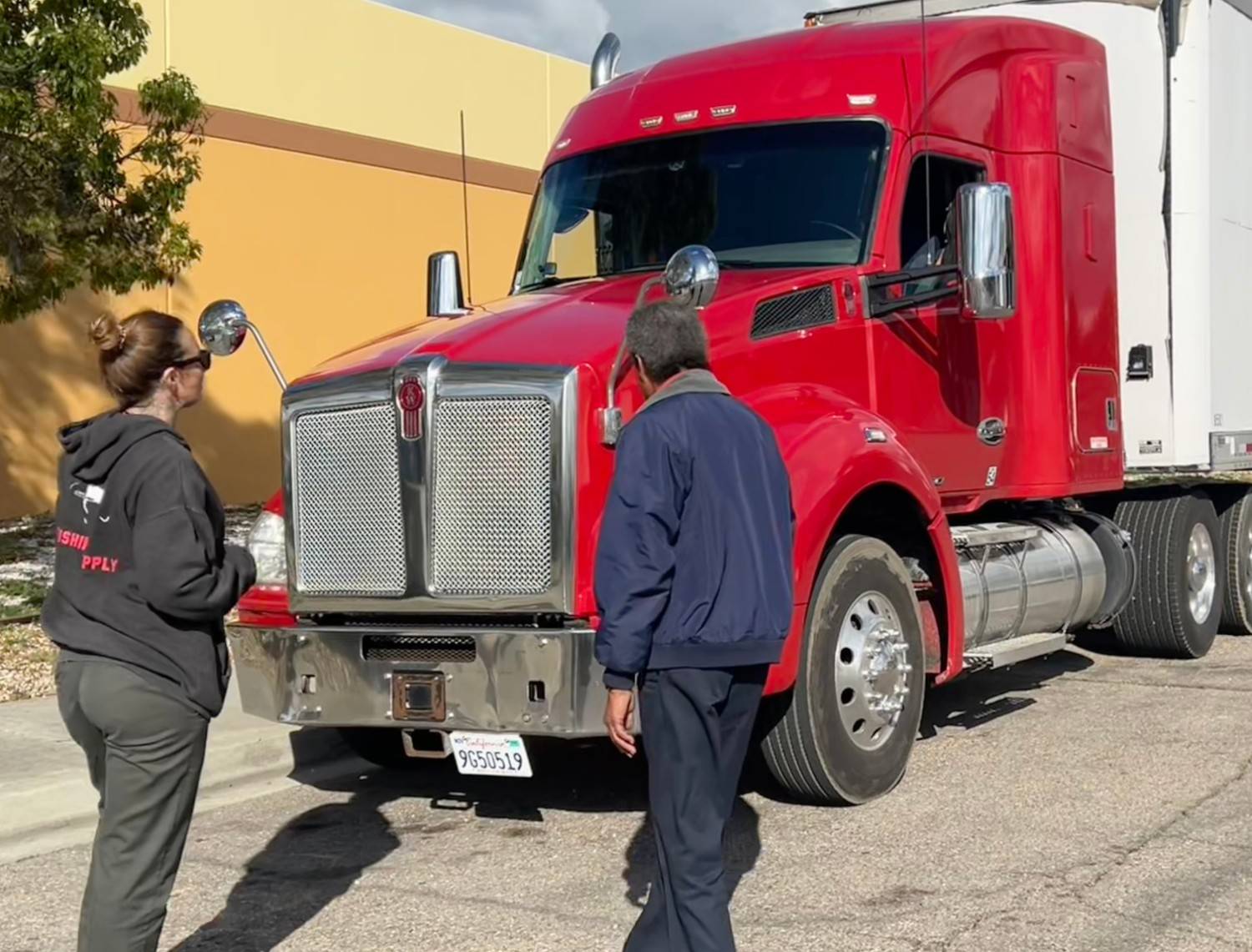
Drivers must provide their own vehicle for the test, and it must match the class of license being tested. Drivers who pass all three sections receive an interim CDL valid for 60 days while the permanent license is processed.
United Truck Driving School will help you coordinate an appropriate vehicle for testing purposes.
CDL License Classes: Class A, B, and C
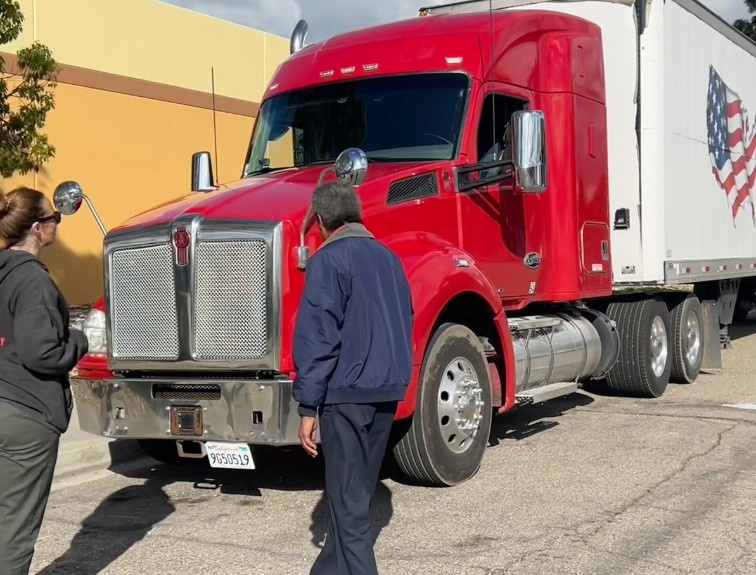
California offers three CDL classes. Choosing the right class depends on the type of vehicle and the career path. For a deeper comparison, see Class A vs. Class B CDL.
Class A CDL
Required for combination vehicles with a Gross Combination Weight Rating (GCWR) of 26,001 pounds or more, where the towed unit exceeds 10,000 pounds. This class covers semi-trucks, tractor-trailers, and flatbeds. It is the standard license for over-the-road trucking.
Class B CDL
Required for single vehicles with a GVWR of 26,001 pounds or more, or for towing a trailer under 10,000 pounds. Common Class B jobs include local delivery, waste management, and bus driving. See Class B CDL training options.
Class C CDL
Required for smaller commercial vehicles that transport 16 or more passengers, or that carry hazardous materials requiring placards but do not fall under Class A or B weight thresholds.
CDL Endorsements That Expand Job Options
Endorsements are add-ons to a CDL that allow drivers to operate specific vehicle types or carry certain cargo. Each endorsement requires a separate knowledge test, and some require additional background checks.
| Code | Endorsement | What It Allows |
| H | Hazardous Materials | Transport of HAZMAT cargo; requires TSA background check and knowledge test |
| N | Tank Vehicles | Carrying liquids or gases in a tank |
| P | Passengers | Vehicles seating 16 or more people; requires written and road tests |
| S | School Bus | School bus operation; requires P endorsement as well |
| T | Double/Triple Trailers | Pulling double or triple trailer combinations |
| X | Tanker + HAZMAT | Combined tanker and hazardous materials permissions |
Frequently Asked Questions
Is Entry-Level Driver Training required to get a CDL in California?
Yes. Since February 7, 2022, federal law requires all Class A and Class B CDL applicants to complete ELDT through a provider listed on the FMCSA Training Provider Registry. California also requires a minimum of 15 hours of behind-the-wheel training.
How many tests are required for a Class A CDL permit in California?
Three knowledge tests are required: General Knowledge, Class A-specific, and Air Brakes. Each test allows up to three attempts, and a score of at least 80% is needed to pass.
What is the difference between intrastate and interstate CDL certification?
Intrastate means driving within California only; interstate means crossing state lines. Interstate drivers must be at least 21 years old, while intrastate drivers only need to be 18.
How long does it take to get a CDL in California?
Most applicants complete the process in four to eight weeks, depending on program length and test scheduling. The mandatory 14-day waiting period after receiving the CLP is built into that timeline.
What financial aid options are available for CDL training in California?
WIOA, GI Bill benefits, MyCAA, and carrier tuition reimbursement programs are the most common options. See financial aid for CDL training for a full breakdown.