Key Takeaways
Pre-trip inspections are a federal requirement enforced through California’s DMV, with real consequences for drivers and CDL candidates. Here is what to know heading into 2026.
- Federal law requires a pre-trip inspection before every shift, after picking up a new trailer, and after any 10-hour break.
- California’s DMV cross-checks ELD data during audits, so a pre-trip inspection that looks too short can draw scrutiny even if the paperwork is in order.
- California has adopted the modernized CDL skills test. It uses fewer inspection items and allows the DMV’s official checklist, but examiners still expect drivers to use the right terms and show each step by hand.
- Common test mistakes include reciting memorized lines without looking at parts, skipping hardware checks, and rushing the air brake check.
- Practicing the same routine every time builds muscle memory. That leads to higher pass rates and safer habits on the job.
- A pre-trip inspection is not just something drivers do for a test. It is a daily skill that protects a driver’s CDL, prevents violations, and helps avoid costly breakdowns.
What is a Pre-Trip Inspection and Why It Matters in 2026
Federal law requires every commercial driver to inspect a vehicle before driving it. California’s DMV enforces that rule through its own Commercial Driver Handbook and testing program. In 2026, that rule carries more weight. Testing standards have changed, enforcement is stricter, and skipping steps has real consequences.
When a Pre-Trip Inspection is Required by Law
Under FMCSA regulation, a driver may not operate a commercial vehicle without first being certain that it is in safe working order. California’s Commercial Driver Handbook builds on this rule. It adds that drivers must review the last vehicle inspection report and confirm that any problems were fixed before driving.
A pre-trip inspection is required in three situations:
- At the start of a driver’s shift
- Any time a driver picks up a new trailer
- After a break of 10 hours or more
How Long a Pre-Trip Inspection Takes
A full inspection of a combination vehicle typically takes 30 to 45 minutes, depending on the vehicle and conditions. California’s own DMV Vehicle Inspection Test runs about 40 minutes for the standard version, and the DMV places no time limit on the modernized version of the test.
Rushing is a warning sign. The FMCSA now checks Electronic Logging Device (ELD) data against inspection records during audits. A pre-trip inspection that looks too short next to a driver’s logged time can draw attention, even before an inspector finds a defect.
The rules about how, when, and what drivers must inspect keep changing. The next section covers what applies right now in California.
2026 Rules and Regulations for Pre-Trip Inspections
“The driver is personally responsible for this inspection. You cannot rely on a mechanic’s word, a dispatcher’s assurance, or the previous driver’s report alone.”
— FMCSA, Federal Motor Carrier Safety Administration
The FMCSA sets the federal rules, and California’s DMV administers them through its own testing standards. Here is what changed for CDL testing in California, and what it means for new applicants.
The ELDT Mandate and What It Means for New CDL Applicants
FMCSA’s Entry-Level Driver Training rules are also known as ELDT. They apply to anyone getting a Class A or Class B commercial driver’s license for the first time, and to drivers moving up from Class B to Class A. These rules took effect in February 2022. Pre-trip inspection is a required part of the curriculum. Schools who are compliant with the ELDT mandate are required to teach pre-trip inspections both in the classroom and behind the wheel.
The Modernized CDL Testing Model in California
The American Association of Motor Vehicle Administrators, or AAMVA, redesigned the CDL skills test. FMCSA approved the changes. California has adopted this modernized model at many of its CDL Testing Centers. The updated Vehicle Inspection section uses fewer items. Applicants can also use the DMV’s official checklist to help guide the order of inspection. The goal is to test the skills a driver will actually use on the job.
California’s DMV also confirms there is no time limit for the Vehicle Inspection or Basic Control Skills portions of the test. Drivers are not penalized for being thorough.
Regulations explain what is required. A checklist explains how to do it, and the order matters more than most drivers realize.
Step-by-Step Pre-Trip Inspection Checklist
Knowing the rules is one part of the job. Walking around a 70-foot truck and knowing what to check at each stop is a different skill. A structured checklist, followed the same way every time, is what separates a thorough inspection from a missed defect.
In-Cab Checks: Gauges, Mirrors, Safety Equipment, and Emergency Kit
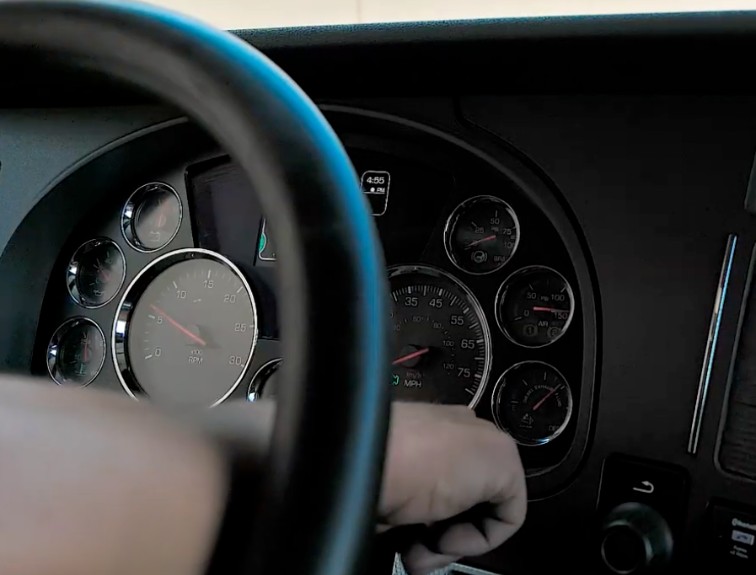
Start the engine safely. Set the parking brake, put the gearshift in neutral or park, press the clutch, then start the engine. Oil pressure should rise to normal within seconds. Air pressure should build from 50 to 90 psi within three minutes. The temperature gauge should begin to climb. Check that mirrors are clean and adjusted. The windshield should have no damage. Confirm the emergency kit is present: spare fuses, three red reflective triangles, and a charged fire extinguisher.
Engine Compartment: Fluids, Belts, Hoses, and Steering Parts
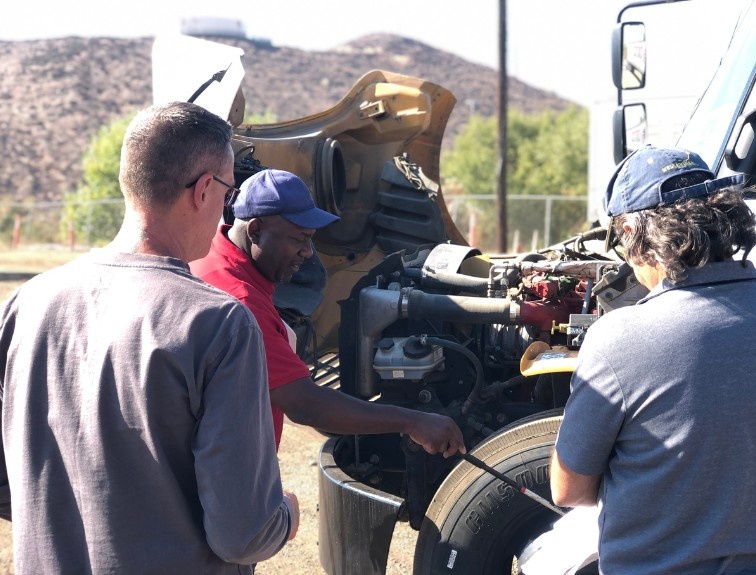
With the engine off, look for puddles or dripping fluid. Check that oil, coolant, and power steering fluid are all above the refill marks. Inspect the belts on the alternator, water pump, and air compressor for cracks or fraying. Each belt should have no more than 3/4 inch of play. If a part is gear-driven instead of belt-driven, the driver should say so out loud during the test.
Front Axle, Tires, and Suspension
Check for leaf springs that are missing, shifted, cracked, or broken. Look at the rims for damage or illegal welds. Check tread depth and tire pressure with a gauge, not by kicking the tires. Confirm that hub oil seals are not leaking.
Driver Side Walk-Around: Fuel Tank, Battery Box, Frame, and Lights
Check that fuel tanks are secure, with tight caps and no leaks. Inspect the frame for cracks, broken welds, or holes. Confirm that all lights and reflectors are clean and working, and that they show the right color: red at the rear, amber elsewhere.
Rear Axle, Drive Tires, Brakes, and Driveshaft
Inspect the brake parts. Check the drums for cracks and the linings for wear. When brakes are released, push rod travel should not go past one inch when pulled by hand. Check the driveshaft for bends or cracks, and confirm the couplings are secure.
Coupling Area, Fifth Wheel, and Air Lines
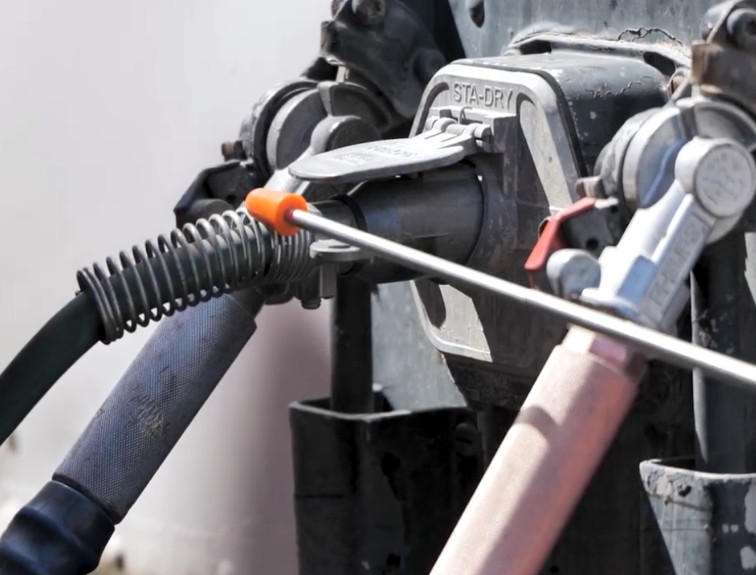
Check that there is no gap between the fifth wheel and the trailer apron. Confirm the locking jaws are around the kingpin and the release handle is in the right position. Check the glad hand rubber gaskets for cracks, and listen for air leaks.
Trailer Inspection: Landing Gear, Doors, Lights, and Mud Flaps
Confirm the landing gear is raised and the crank handle is secure. Check the trailer lights, reflectors, and reflective tape. Confirm the doors open and close properly, and that mud flaps are in place and undamaged.
A full inspection covers the entire vehicle. For CDL candidates in California, an examiner scores a version of this same process, and the standards are stricter than most students expect.
How to Pass the Pre-Trip Portion of the CDL Skills Test
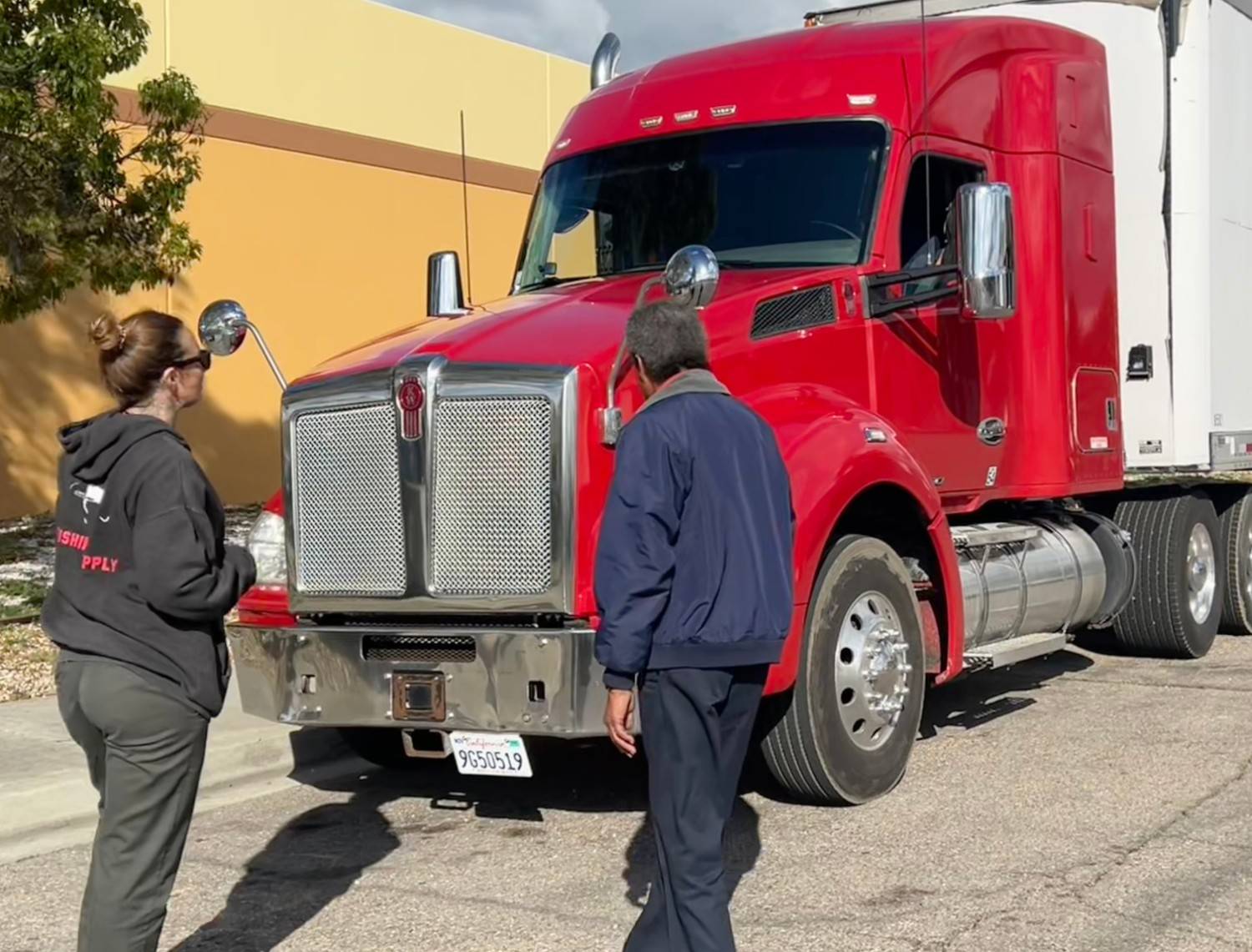
California allows applicants to use the DMV’s official Vehicle Inspection Checklist during the test. Examiners still expect drivers to point to or touch each item and explain what they are checking, so the checklist works as a guide, not a script.
The pre-trip inspection is one of three parts of the CDL skills test. It is also the part most students underestimate. California’s own guidance for the Vehicle Inspection Test is clear: drivers must point to or touch critical safety features and explain each one to the examiner.
Common Mistakes That Cost Students a Passing Score
With so many things steps to the pre-trip inspection, it’s fairly common or the student that’s testing to make mistakes. Some of the few most common ways that points get deducted are:
- Reciting memorized lines without looking at the parts
- Forgetting hardware checks, like cotter pins or lug nuts, which can mean an automatic fail
- Not knowing the minimum and maximum marks for fluid levels
- Rushing the brake check. California treats a wrong air brake procedure as an automatic fail for the whole Vehicle Inspection test
Memory Tricks and Routines That Build Confidence
Students who practice the inspection in the same order every time, every day, for at least two weeks before the test, pass at higher rates. Building that muscle memory through daily repetition is what turns a memorized script into a routine a driver can perform under pressure.
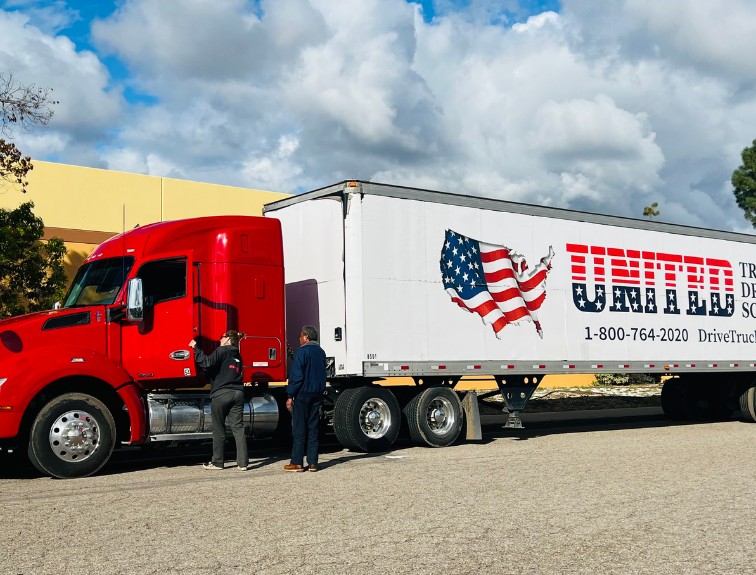
How United Truck Driving School Trains Students on Pre-Trip Inspection
Most CDL programs teach students how to pass the pre-trip part of the exam. United Truck Driving School trains students to do the inspection correctly on the job.
United’s Class A CDL and Class B CDL programs include classroom instruction and behind-the-wheel training. Both programs cover all three parts of the California CDL skills test: pre-trip inspection, backing, and the road test. Most students finish in as little as three weeks, depending on the program, so pre-trip mastery has to happen fast. Instructors teach a repeatable routine from day one.
Since the ELDT rules took effect, United’s classroom curriculum has grown. It now covers not just what to check, but how to document defects and meet requirements. Students learn inspection as a skill they will use every working day, not a script they memorize and forget.
A driver who inspects thoroughly from day one stays compliant and avoids violations. That habit protects a commercial driver’s license for the long run.
Contact United Truck Driving School to learn about Class A, Class B, and CDL-A plus Passenger programs at the San Diego or Riverside campus. Call a campus representative or visit the admissions page to learn about enrollment or ask about job placement support.
FAQs
Can a driver just describe each part instead of touching it?
No. California’s DMV requires drivers to point to or touch each part while explaining what they are checking.
Why does the brake check matter so much during the test?
A wrong air brake procedure ends the CDL skills test right away in California. Drivers must show that air pressure builds correctly and that push rod travel stays under one inch.
What is the best way to prepare for the pre-trip portion of the test
Practicing the same routine every day for at least two weeks builds the muscle memory examiners look for. Practicing in different lighting conditions also helps, since real inspections happen before dawn and after dark.
Can drivers use a checklist during California’s CDL skills test?
Yes. California’s DMV allows applicants to use the official Vehicle Inspection Checklist during the modernized version of the test.
What are the three inspection requirements for a commercial vehicle
Federal law requires three things: a pre-trip inspection before driving, a post-trip inspection when defects are found, and a review of the last inspection report before each trip. Drivers must also confirm that any noted problems were fixed before driving.