A Class B commercial driver’s license (CDL) is one of the fastest ways to start a professional driving career in California. It covers many of the trucks and buses people see every day, from dump trucks to city buses. Most Class B jobs keep drivers close to home. This guide explains what a Class B license in California allows, the steps to earn one, and the jobs it can lead to.
What Is a Class B License in California?
The California DMV says a Class B CDL allows a driver to operate any single vehicle with a gross vehicle weight rating (GVWR) of more than 26,000 pounds. It also covers any 3-axle vehicle that weighs more than 6,000 pounds. A “single vehicle” carries its load on its own frame instead of pulling it on a heavy trailer.
Common Class B vehicles include:
- Dump trucks and concrete mixers
- Box trucks and delivery trucks
- Garbage and recycling trucks
- Tow trucks
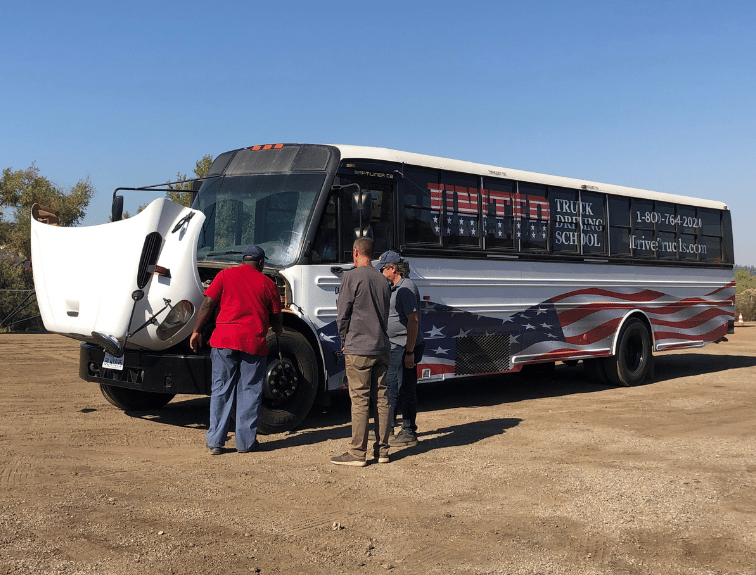
- City, shuttle, and tour buses (with a passenger endorsement)
A Class B license does not cover tractor-trailers. Driving a semi requires a Class A CDL, which allows heavier combination vehicles.
Who Can Get a Class B CDL in California?
To apply, a person needs to:
- Be at least 18 years old
- Hold a valid California driver’s license
- Pass a DOT medical exam, which must be renewed every two years
- Meet DMV residency and legal presence rules
The DMV has paused issuing CDLs to non-domiciled applicants until further notice. Anyone unsure about eligibility should check with the DMV before enrolling. Each of the California CDL requirements comes with its own paperwork, so it helps to gather documents early.
How to Get a Class B License in California
Earning a Class B follows the same basic path as getting any CDL in California. There are four main steps.
Step 1: Pass the knowledge tests. Class B applicants take the general knowledge test, plus the air brakes test if the training vehicle has air brakes. Students adding a passenger endorsement also take the passenger test. After passing, the DMV issues a commercial learner’s permit (CLP), which allows supervised practice driving.
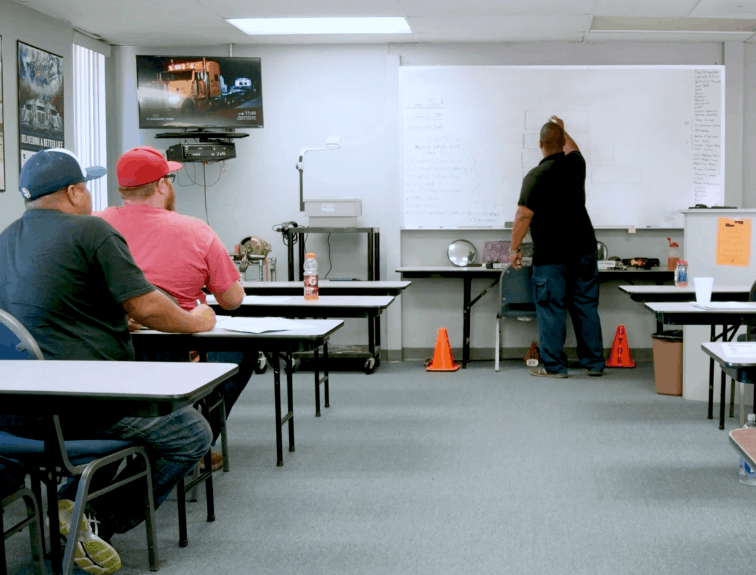
Step 2: Complete Entry-Level Driver Training (ELDT). Federal rules require first-time Class B applicants to complete Entry-Level Driver Training with a registered provider before the skills test. ELDT includes classroom lessons and behind-the-wheel practice.
Step 3: Hold the permit for at least 14 days. A CLP holder needs to wait at least 14 days before taking the skills test. Most students use this time to train and practice.
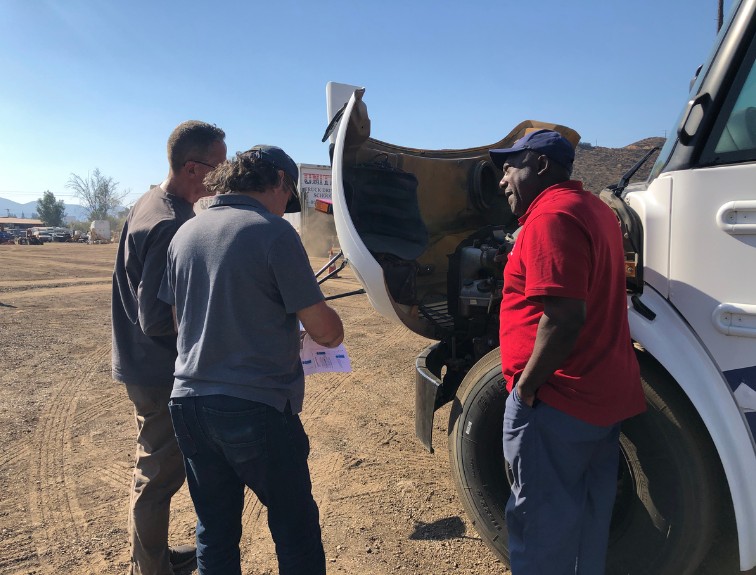
Step 4: Pass the skills test. The CDL skills test has three parts: a vehicle inspection, a basic control skills test, and a road test. The DMV requires Class B applicants to test in a truck or bus with a GVWR of 26,001 pounds or more. The inspection portion trips up many students, so practicing a full pre-trip inspection before test day can make a big difference.
After passing all three parts, the driver receives a Class B CDL.
How Long Does Class B Training Take?
At United Truck Driving School, the Class B CDL plus Passenger program takes 3 weeks, or 120 hours. Day classes start once a month at the San Diego campus and the Riverside campus.
Total CDL training time varies by school and license class. Students who need help covering the cost can look into tuition assistance. Veterans may also qualify for veteran education benefits.
Adding Endorsements to a Class B License
Endorsements allow a driver to handle certain vehicles or cargo. Common Class B endorsements include:
- Passenger (P): for buses that carry 16 or more people, including the driver
- School Bus (S): for school buses, and requires the P endorsement as well
- Tank Vehicle (N): for hauling liquids in bulk
- Hazardous Materials (H): for placarded loads, and requires a TSA background check
Each one requires extra testing. The process for adding CDL endorsements is similar for Class A and Class B drivers.
Where a Class B License Can Take You
Class B drivers work in industries that keep California’s cities running, including:
- Construction: dump trucks, concrete mixers, and material delivery
- Waste and recycling: garbage and roll-off trucks
- Delivery: box trucks for food, beverage, and furniture companies
- Public transit and travel: city buses, airport shuttles, and tour buses
- Roadside services: tow and recovery trucks
Many of these jobs run on regular schedules. According to the U.S. Bureau of Labor Statistics (BLS), the national median pay for heavy truck drivers was $58,640 in May 2025. That group includes many Class B truck jobs and tow truck drivers. The national median for bus drivers was $49,390. Pay varies by employer, location, and endorsements.
These are only a few of the truck driving career paths open to licensed drivers. Anyone still deciding between license types can weigh whether Class B training is the right fit. After graduation, United’s job placement team works one-on-one with students. New drivers can also stand out by building the soft skills employers look for.
Moving Up to a Class A License Later
Some drivers start with a Class B and later upgrade. Upgrading from Class B to Class A requires completing Class A ELDT before the skills test. United offers both Class A CDL training and a CDL-A plus Passenger program for drivers who want both trucking and bus options.
Start Class B CDL Training
A Class B license can lead to a steady, local driving career in just a few weeks of training. United Truck Driving School has trained commercial drivers in California since 1978. Students ready to take the first step can apply today or reach out to the admissions team with questions.
Frequently Asked Questions
Can a Class B driver pull a trailer?
Yes, but only a light one. A Class B vehicle can tow a trailer with a GVWR of 10,000 pounds or less, and anything heavier requires a Class A CDL.
Is a Class B CDL the same as a Class B license for motorhomes?
No. California also has a noncommercial Class B license for large motorhomes, but it does not allow a person to drive commercial trucks or buses for work.
Can an 18-year-old drive a Class B truck in California?
Yes, but only within California. Drivers must be at least 21 to haul loads across state lines or transport hazardous materials.
Does it matter if the skills test is taken in an automatic truck?
Yes. A driver who tests in an automatic will receive a restriction that blocks them from driving trucks with a manual transmission.
What happens if a student fails part of the CDL test?
The student can retake the test. Each California DMV application allows three attempts at the knowledge tests and three total attempts at the skills test.
Do most Class B drivers get home every night?
In most cases, yes. Delivery, construction, waste, and transit jobs usually run local routes that end each day.